By Maxine Ebegbuzie, Neuromarketing & AI Growth Strategist
Humor in branding is the secret sauce that makes your marketing message unforgettable in an AI-driven world.
This post shows you how humor in branding supercharges engagement, trust, and conversions.
Let me start with a little experiment. Imagine this scenario: You’re scrolling through social media, minding your own business, dodging endless political debates and unsolicited vacation photos. Suddenly, you see an ad that says, “We offer exceptional services at competitive prices!” Riveting, right? Your thumb instinctively prepares for the swift scroll-past.
Now, imagine another ad that pops up, perfectly timed, that says, “Our services are so good, even your grandmother would approve—and she still thinks the internet is a fad, bless her heart.”
Which one are you more likely to remember? Which one makes you pause, maybe even crack a smile, and perhaps, just perhaps, investigate further?
Exactly.
In a digital universe increasingly saturated with generic, AI-generated content and flat corporate messaging, the ability to make a genuine human connection is your most potent superpower. And often, that connection is forged with something as simple, yet profound, as a well-placed chuckle.
The Low Bar for Humor: Your Brand’s Unfair Advantage
“The bar for humor in branding is so low that even your dad’s corniest joke could probably clear it.”
— Maxine Ebegbuzie
This isn’t just a quip; it’s a strategic observation. Humor doesn’t have to be groundbreaking, edgy, or even universally hilarious to be effective. It just needs to be human. It needs to acknowledge that your audience isn’t just a data point; they’re people with feelings, interests, and a natural inclination towards joy.
Why does this matter now, more than ever?
People are drowning in content. They’re bombarded with marketing messages every single day—an overwhelming torrent of information vying for their precious attention. Most of those messages are utterly forgettable, not because the products or services themselves are bad, but because their delivery is as exciting as reading the terms and conditions on your phone contract.
How do you cut through that noise? How do you become the brand that sticks in their minds?
Sometimes, all it takes is a dash of authentic, brand-aligned humor. It’s the spoonful of sugar that makes your brand’s message go down, making it not just digestible, but memorable.
The Neuromarketing Magic: How Humor Hooks the Brain (and the Wallet)
Let’s get a little nerdy for a second, because the power of humor isn’t just anecdotal; it’s rooted in our very biology, a concept I explore deeply as a Neuromarketing Strategist.
When we laugh, our brains don’t just passively absorb information. They unleash a potent cocktail of “feel-good” chemicals: dopamine, endorphins, and oxytocin. These neurochemicals aren’t just about fleeting happiness; they play a critical role in:
- Memory Consolidation: Those positive emotions create stronger neural pathways, literally helping to cement memories. This is why you can probably still remember the punchline to a joke you heard 10 years ago but have no clue what you had for breakfast yesterday. For your brand, this means going from “seen” to “remembered.”
- Trust & Connection: Oxytocin, often called the “bonding hormone,” fosters feelings of trust and rapport. When a brand makes you laugh, it feels more human, more relatable, and consequently, more trustworthy.
- Reduced Resistance: Humor acts as a cognitive disarmer. It lowers our psychological defenses against marketing messages, making us more open to receiving and processing the brand’s core offering.
So, how does this translate to your bottom line?
The data speaks volumes:
- According to a survey by Clutch, 70% of consumers say they are more likely to trust a brand that makes them laugh. Trust is the bedrock of conversion.
- A study by Nielsen found that humorous ads are not only more memorable but also 23% more likely to drive purchase intent. This is where the chuckles turn into conversions.
- HubSpot reports that 47% of email recipients open emails based on the subject line. Knowing that emails with humorous subject lines get a 46% higher open rate is incentive enough to consider humor. If your email isn’t opened, it can’t convert.
Are you leveraging the science of laughter to build stronger, more profitable connections with your audience?
Beyond the Punchline: Precision Humor in a Data-Rich Landscape
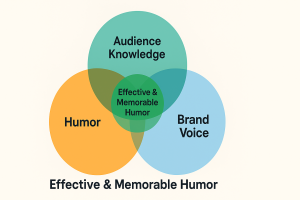
But here’s the catch, and it’s a crucial one in the age of intelligent marketing: humor in branding isn’t just about cracking jokes willy-nilly. It’s about timing, relevance, and intimately knowing your audience. It’s like cooking; too little spice, and it’s bland; too much, and it’s inedible. Get it just right, and you’ve got a memorable dish that people will crave, and more importantly, convert from.
This is where your unique brand personality, defined through frameworks like our “Confident Innovator” core with “Empathetic Guide” and “Savvy Storyteller” sub-personalities at Max Mobile Solutions, comes into play. Your humor must be an authentic extension of who your brand is. Forcing it will feel inauthentic and backfire.
Humor in the AI Age: When Bots Learn to Crack a Smile (and When Humans Still Rule)
With the explosion of AI-generated content, from blog posts to social media captions, authenticity becomes a rare and valuable commodity. While AI tools are becoming incredibly sophisticated at generating text, truly original, nuanced humor—the kind that truly connects and disarms—still largely remains the domain of human creativity.
- AI for Testing, Not Originating: AI can be an invaluable tool for testing the effectiveness of different humorous angles (e.g., A/B testing subject lines, ad copy variations). It can help analyze audience responses to identify what resonates most.
- Personalized Humor (Carefully): In the future, with vast amounts of first-party data, AI might be able to personalize humorous content (e.g., the AI Sales Rep selecting the most appropriate humorous opener based on a prospect’s industry or previous interactions). However, this requires extreme caution to avoid missteps or insensitivity.
- The Human Touch Remains Paramount: For truly impactful, brand-defining humor, the human strategist remains essential. It’s our empathy, cultural understanding, and creative spark that craft the jokes that transcend algorithms and forge genuine emotional bonds.
Posed Question: As AI floods the digital space with perfect prose, how will your brand ensure it stands out as genuinely human and memorable?
Connecting the Dots: How Humor Fuels Your MaxPixel AI & Growth Strategy
This isn’t just a feel-good piece; it’s a strategic imperative. When you leverage humor effectively, it creates a powerful ripple effect that directly enhances the efficacy of your advanced growth tools, particularly MaxPixel AI.
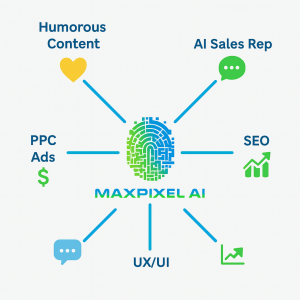
1. Humor & First-Party Data Capture: The Engaged Visitor is an Identified Visitor
- The Link: Humorous content naturally drives higher engagement. People spend more time on pages, click on humorous ads, and share funny social posts. This increased engagement means more opportunities for MaxPixel AI to identify them in real-time. The longer they stay, the more behavioral data points MaxPixel AI collects, enriching the visitor profile.
- Contrast with Traditional: Generic, humorless content often results in higher bounce rates and less time on site, reducing the window for even sophisticated tools to gather meaningful data. Your “unforgettable” content helps MaxPixel AI do its job even better.
2. Humor & Your AI Sales Rep: Warming Up the Cold Outreach
- The Link: Imagine a MaxPixel AI-driven AI Sales Rep, armed with 40+ data points about a prospect, also capable of infusing a touch of brand-appropriate humor in its personalized emails. This elevates the email from a transactional message to a memorable interaction. That “46% higher open rate” for humorous subject lines applies directly here, ensuring the AI Sales Rep’s hyper-personalized emails are not just opened, but appreciated and responded to.
- Contrast with Traditional: Typical cold outreach is often perceived as spammy or impersonal. Adding a human, humorous touch, even via AI, can drastically change its reception.
3. Humor in Integrated Campaigns (SEO, PPC, Programmatic): Driving Qualified Traffic
- The Link: Humorous ad creatives (for PPC and programmatic) grab attention, leading to higher click-through rates (CTRs). This means more qualified traffic landing on your site for MaxPixel AI to identify. For SEO, engaging, shareable content (often humorously infused) earns backlinks and social shares, boosting organic visibility and driving more inbound traffic. The data insights from MaxPixel AI can even inform what kind of humor resonates with specific targeted audiences for even greater impact.
- Contrast with Traditional: Boring ads get ignored. Unremarkable content gets lost in the search results. Humor helps you stand out and bring more valuable leads into your MaxPixel AI identification funnel.
4. Humor in UX/UI & Customer Experience: A Delightful Journey
- The Link: Microcopy with a witty flair on your website (e.g., error messages, loading screens, form field labels) can transform a potentially frustrating user experience into a delightful one. This emotional lift enhances brand perception and encourages users to continue their journey on your site, deepening their engagement, which MaxPixel AI tracks. A more positive experience, fueled by humor, contributes to higher conversion rates identified through MaxPixel AI’s conversion paths.
- Contrast with Traditional: Clunky, robotic website copy can create friction and annoyance, leading visitors to abandon their journey, even if MaxPixel AI has identified them.
Strategic Infusion: How to Weave Humor into Your Brand Ethos
So, how do you inject this potent secret sauce into your brand without it tasting forced?
- Be Yourself (Your Brand’s Authentic Self): Don’t force it. If humor isn’t naturally a part of your brand’s voice, it can come across as inauthentic or even desperate. Refer back to your brand personality. Is it a “Confident Innovator” with a “Savvy Storyteller” flair? Then your humor should be intelligent, perhaps a bit dry, and confidently self-aware, rather than slapstick. Authenticity is key.
- Know Your Audience (Leverage MaxPixel AI Insights!): What’s funny to one group might fall flat (or even offend) another. This is where MaxPixel AI’s rich data points become invaluable. Understanding your B2B audience’s industry, company culture, and typical communication style, or your B2C audience’s demographics and interests, allows you to tailor your humor for maximum resonance.
- Keep It Light & Universal (Generally): For broad appeal and safety, the safest bet is often to keep humor light, relatable, and avoid controversial topics. Self-deprecating humor (within reason) often works wonders, as it makes your brand seem humble and approachable.
- Consistency (But Not Stale): Once you find your humorous stride, maintain it across channels—from your social media posts to your email subject lines (remember that 46% higher open rate!), to your website microcopy, and even in the tone of your chatbots. But keep it fresh; a joke told too many times loses its charm.
Real-World Revelations: Brands That Mastered the Chuckle
Let’s look at a few brands that have mastered the art of humor, transforming it from a mere marketing tactic into a core part of their brand identity:
- Old Spice: Their “Smell Like a Man, Man” campaign didn’t just sell deodorant; it sold an absurd, hyper-masculine fantasy that was so over-the-top it became iconic. It turned a mundane product into a cultural phenomenon. Why? Because it was absurdly funny, yet perfectly on-brand for a product that promised to make you feel extraordinary.
- Dollar Shave Club: Their viral launch video famously started with “Our blades are f***ing great.” It was irreverent, bold, and spoke directly to a frustrated audience tired of expensive razors. It went viral because it was authentic, funny, and exactly what their target audience needed to see. It catapulted them to success, proving humor can launch an empire.
- Wendy’s (Twitter): Their famously sassy and direct Twitter presence has earned them legions of fans. They don’t just sell burgers; they sell a personality that’s unafraid to roast competitors or engage in witty banter. This builds a loyal community that feels connected to the brand.
These examples show that humor isn’t just about fleeting laughs; it’s about building enduring brand affinity and driving tangible results.
Conclusion: Your Brand, Unforgettable.
In the crowded, ever-evolving world of digital marketing, where AI is increasingly the norm, humor is your strategic secret weapon. It’s the human touch, the neuromarketing hack, the spoonful of sugar that makes the branding medicine go down—memorable, effective, and most importantly, deeply human.
So, if you want your brand to stand out from the algorithmic noise, if you want your messages to resonate deeply, and if you want your conversions to soar, don’t be afraid to crack a joke, tell a relatable story, or even poke a little fun at yourself. After all, if all else fails, just remember: The bar for humor in branding is low. Really low. And if you’re ever in doubt, just throw in a pet frog. But for truly intelligent, conversion-optimized growth, remember to integrate humor with the unparalleled power of real-time insights from MaxPixel AI.
Ready to transform your brand from forgettable to unforgettable, driving unparalleled growth in the process?
Your Next Steps to an Unforgettable Brand:
I want you to try out these tactics using visitors to your site that continuously slip through your fingertips. We want you to experience my tool that identifies those that ccome to our site and usually leave without a trace. I will identify them by first name, email, show you the pages they were browsing, how long they browsed each page, and so much more. Then you can send automated messages in your brand voice on autopilot 24/7! I will give you up to 400 identifications just so you can jumpstart and see!
- Experience the Magic: GET FREE LEADS WITH MAXPIXEL AI WITH OUR FREE TRIAL!
- For B2C Businesses: Get 400 FREE LEADS TODAY to see the power of real-time identification.
- For B2B Businesses: Get 25 FREE LEAD CREDITS TODAY to discover high-value prospects.
- Set up a Meeting Today: Let’s discuss how MaxPixel AI and our comprehensive growth strategies can make your brand truly resonate.
- Subscribe to the Max Level Marketing Newsletter: Stay ahead of the curve with cutting-edge insights.
- Take a Peak on LinkedIn Here: Connect with Maxine and dive deeper into the future of digital marketing.
About Maxine Ebegbuzie:
Maxine Ebegbuzie is a trailblazing Neuromarketing & AI Growth Strategist and a recognized authority in AI-driven growth marketing and advanced SEO. With a profound understanding of human behavior and decision-making, Maxine specializes in merging cutting-edge AI and automation with neuromarketing principles. Her mission is to empower businesses not just to grow, but to truly thrive by deeply understanding, intelligently engaging, and proactively converting their audience in the rapidly evolving digital landscape.
Sources:
- HubSpot: “47% of email recipients open emails based on the subject line.”
https://blog.hubspot.com/marketing/increasing-email-engagement - Nielsen Study – https://www.nielsen.com/insights/2015/ads-with-impact-what-messaging-themes-speak-loudest-to-consumers/
- Theories of Humor (Benign Violation, Relief, etc.)
https://en.wikipedia.org/wiki/Theories_of_humor
 Maxine Ebegbuzie is the CEO of Max Mobile Solutions,